

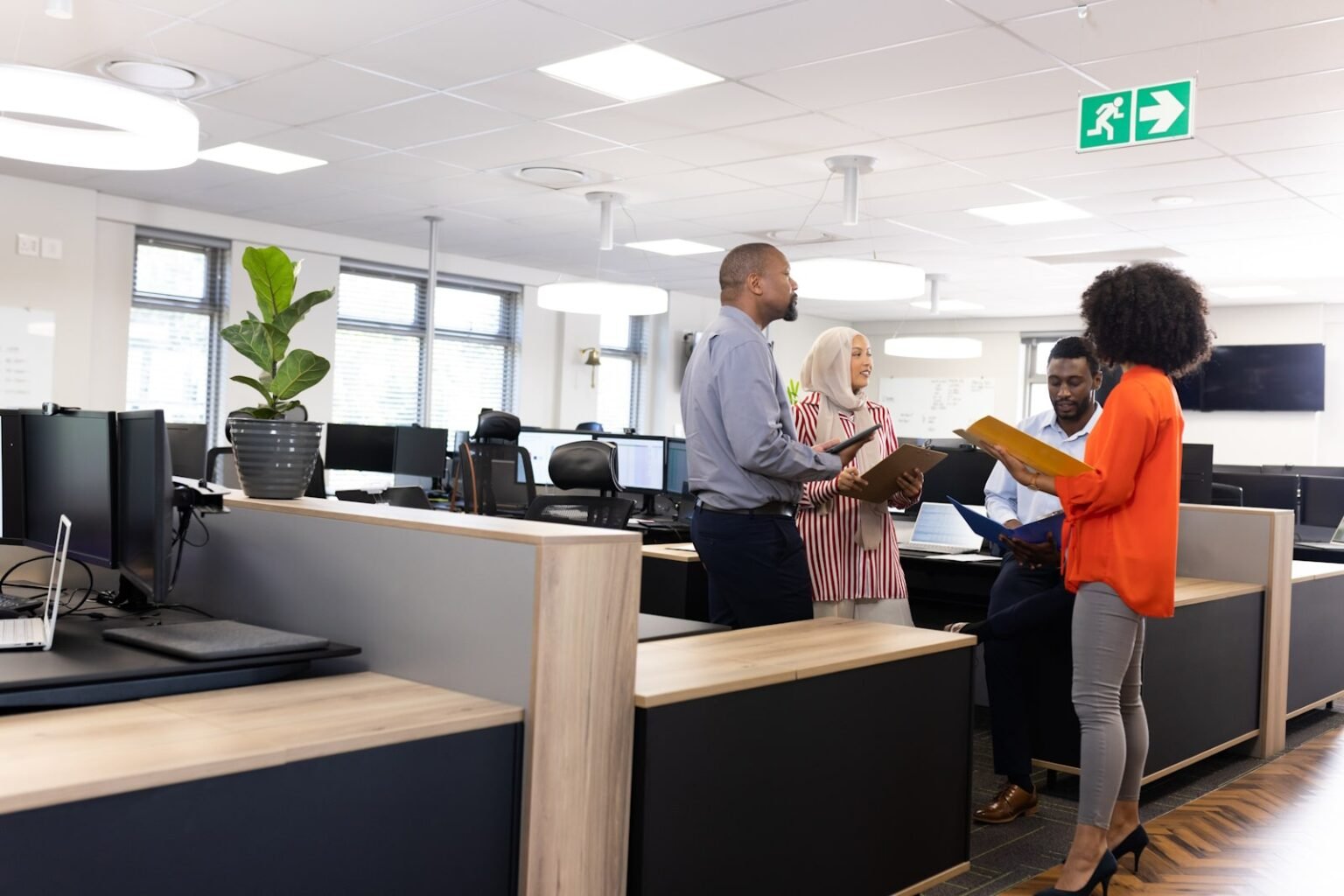
Research shows that employees who are happy with their physical work environment are 16% more productive and 18% more likely to stay with their employer long-term. In South Africa, where businesses face unique challenges such as load-shedding, infrastructure strain, and a highly diverse workforce, a well-considered office environment can make the difference between thriving and merely surviving. This is where interior design companies add immense value, crafting workplaces that go beyond aesthetics to focus on functionality, wellness, and innovation. By adopting proven design best practices, companies can create office environments that support employee well-being, drive efficiency, and reflect organisational values.
Ergonomic Workstations
Ergonomics is about designing workstations to fit people, rather than forcing people to adapt to their environment. Adjustable desks, ergonomic chairs, and correctly aligned monitors significantly reduce the risk of musculoskeletal disorders, which account for nearly one-third of all workplace injuries worldwide. The South African Council for Scientific and Industrial Research has highlighted that improving ergonomic conditions can reduce absenteeism rates by up to 20%, resulting in tangible productivity gains.
Interior design companies are increasingly recommending sit-stand desks and ergonomic layouts as standard, given that studies show such solutions can improve productivity by 10–15% within months. Organisations that invest in ergonomics often see a full return on investment within one to two years, thanks to fewer injuries, reduced healthcare costs, and improved employee morale.
Lighting Optimisation
Light is one of the strongest influencers of human performance and well-being. Access to natural daylight has been linked to higher energy levels, better sleep quality, and improved mood. Employees seated within 10 metres of a window report a 23% increase in job satisfaction compared to those with no access to natural light. In addition, proper lighting design can reduce headaches, eye strain, and fatigue—common complaints in poorly illuminated offices.
Interior design companies in South Africa are adopting a dual strategy: maximising natural light where possible, and supplementing with circadian-friendly LED systems that mimic daylight. These approaches not only improve employee well-being but also lower energy consumption, a significant consideration in a country where energy efficiency is increasingly vital due to high electricity costs and power shortages.
Air Quality and Ventilation
Air quality has a direct impact on cognitive function and long-term health. Poor ventilation and high levels of indoor pollutants, such as volatile organic compounds from furniture and cleaning products, are linked to fatigue, respiratory problems, and lower workplace performance. Research from Harvard University found that improved air quality can enhance cognitive performance by up to 61%, highlighting its importance in the workplace.
For South African businesses, maintaining fresh airflow through reliable HVAC systems is particularly critical in urban centres where pollution levels can be high. Interior design companies also integrate plants into workspaces as part of biophilic design. Studies show that greenery can reduce stress, improve concentration, and naturally purify the air. Together, these practices create environments where employees feel healthier and more engaged.
Noise Management
Noise is one of the leading causes of workplace dissatisfaction, particularly in open-plan offices. Constant background noise and interruptions have been shown to reduce concentration levels by as much as 15% and increase stress responses in employees. In industries that require deep focus, these distractions can cost businesses significant time and productivity.
Interior design companies are addressing this through strategic design solutions, such as soundproofing, acoustic panels, and the creation of quiet rooms. White noise systems and zoning strategies, where collaboration and focus areas are clearly separated, are also proving highly effective. In South Africa, where hybrid teams frequently require both collaborative and private spaces, such solutions are vital for balancing diverse working styles.
Break and Relaxation Spaces
Providing employees with spaces to step away from their desks is an often-overlooked but crucial component of workplace design. Breakout areas not only allow staff to recharge but also foster informal collaboration, which can spark innovation. Studies indicate that regular breaks can improve productivity by up to 30%, while companies that offer well-designed relaxation spaces report higher employee morale and retention.
Interior design companies in South Africa are increasingly incorporating lounges, coffee corners, and wellness rooms into office layouts. These areas provide employees with opportunities to decompress, build stronger interpersonal relationships, and return to work refreshed. In the long term, such design features contribute to a more positive workplace culture and higher engagement.
Aesthetic Design
The visual and sensory aspects of an office space directly influence how employees feel and perform. Colour psychology demonstrates that different tones evoke distinct moods—greens and blues are calming, while yellows and oranges are energising. Incorporating natural textures, balanced lighting, and visually appealing layouts can reduce stress and enhance creativity.
Interior design companies recognise that aesthetics also extend beyond employee well-being; they serve as a reflection of brand identity. In South Africa, offices that present a polished, professional, and inspiring design also create positive impressions for visiting clients, reinforcing trust and credibility. A thoughtful aesthetic strategy is therefore both a human resource tool and a brand asset.
Wellness Initiatives
Workplace wellness programmes are increasingly being embedded into office design. Beyond ergonomics, companies are providing access to fitness facilities, standing desks, and dedicated mental health resources. The World Health Organisation reports that depression and anxiety cost the global economy over $1 trillion annually in lost productivity, highlighting the importance of proactive interventions.
Interior design companies are aligning with this shift by creating spaces that promote both physical and psychological well-being. From meditation rooms and wellness corners to active design principles that encourage movement, the goal is to integrate health into the daily experience of work. In South Africa, where stress and burnout are major challenges, such initiatives are especially valuable.
Flexibility in Workspace
Workplaces are no longer one-size-fits-all. With hybrid work models on the rise, companies must provide environments that cater to multiple needs. A flexible office should combine open spaces for collaboration, private rooms for focused work, and modular areas that can adapt to changing demands. Global data shows that 67% of employees prefer flexibility in how and where they work, making this a central design priority.
Interior design companies in South Africa are responding by creating adaptable layouts that support hybrid working. Solutions such as hot-desking, movable partitions, and multipurpose furniture allow organisations to maximise their real estate while accommodating varied working patterns. This flexibility also ensures resilience in the face of power outages and shifting workforce expectations.
Sustainability Practices
Sustainable offices are not just environmentally responsible—they also improve employee well-being and reduce costs. Recycling initiatives, energy-efficient lighting, and low-emission materials are becoming standard in modern office projects. Research shows that green buildings can reduce operating costs by up to 30% while improving indoor environmental quality.
South African interior design companies are incorporating sustainability into projects by sourcing local, eco-friendly materials and designing for energy efficiency. These practices align with global standards while supporting national goals to reduce carbon emissions. Importantly, younger generations entering the workforce are more likely to choose employers committed to sustainability, making this an investment in both people and the planet.
Enhancing the office environment is not just about appearance—it is about creating spaces that improve health, productivity, and organisational performance. From ergonomics and lighting to air quality, noise control, and sustainability, each element contributes to a more effective workplace. In South Africa, where businesses must balance local challenges with global best practices, the expertise of interior design companies is essential.
At Maverick International, we specialise in creating workplaces that empower employees and support business goals. Whether you are looking to boost productivity, improve wellness, or strengthen your brand identity, we can design spaces that deliver measurable value. Contact us today to find out how we can help you reimagine your office for long-term success.