

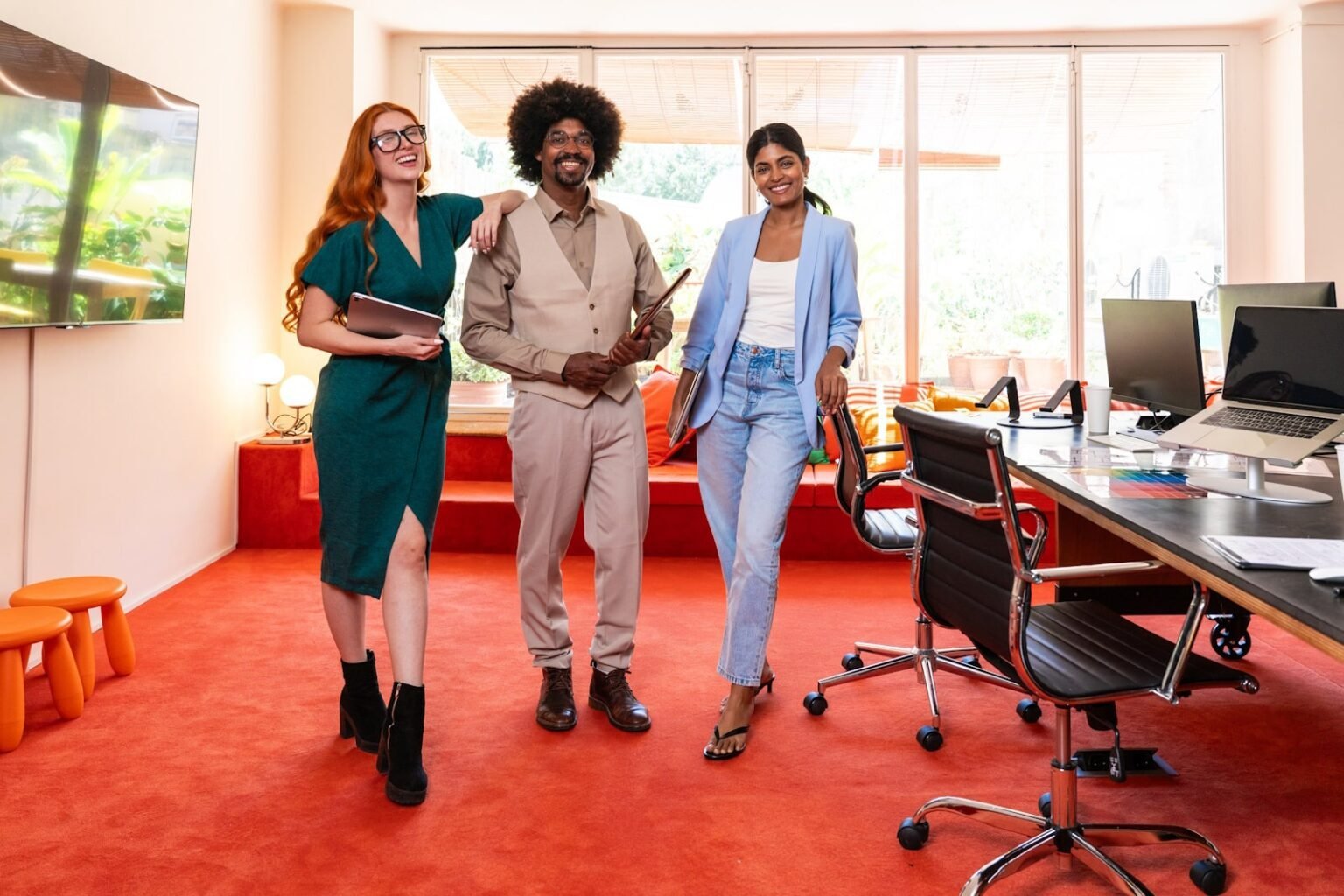
Workplace design has evolved far beyond the simple provision of desks, chairs and meeting rooms. In today’s world, the office has become a powerful expression of organisational values, a mirror of company culture and a physical embodiment of mission. A well-designed office created in partnership with an experienced interior design company can support employee wellbeing, enhance collaboration, attract talent and communicate brand identity to clients and partners.
The challenge is not just about creating a modern or attractive workspace. It is about aligning design choices with who the company is, what it stands for and how it operates. This alignment is where an experienced interior design company can make a measurable difference.
Why Aligning Office Design Matters
Recent data reinforces why workplaces must be designed with intention. According to Gensler’s Global Workplace Survey 2024, which analysed feedback from over 16,000 office workers worldwide, organisations that measure workplace performance through employee experience, not just occupancy, see stronger outcomes in productivity and satisfaction.
Similarly, Deloitte’s Workforce Experience research highlights that only around half of workers feel they are progressing in their organisations. Those who do perceive growth are more than three times more likely to stay. These findings connect directly to office design because physical space influences whether employees feel supported, connected and able to grow.
Steelcase research on wellbeing has also drawn attention to rising levels of burnout across global workforces, showing that design strategies can be an effective lever to support wellbeing, privacy and control in the office. Leesman, which tracks global workplace experience through its LMI index, reports that office experience has improved since 2019, but still trails behind the home environment. This creates a clear imperative for organisations to offer workplaces that are compelling and aligned with values and mission.
Brand Identity In Physical Space
An office is often the first physical touchpoint for clients, recruits and partners. It communicates brand values before a word is spoken. A skilled interior design company ensures that every material, colour palette and spatial layout reflects brand identity.
For example, a technology start-up might use open-plan collaborative layouts, writable walls and vibrant colours to signal innovation and agility. By contrast, a legal practice may favour private offices, refined finishes and formal meeting suites that express professionalism and trustworthiness. Even small details such as signage, lighting and reception design can subtly reinforce the brand narrative.
Cultural Representation In Design
Culture is how values come to life within an organisation. Office design choices can either reinforce or undermine that culture. Companies with casual, creative cultures benefit from flexible social hubs, informal breakout spaces and layouts that encourage spontaneous collaboration. More traditional organisations may prefer structured zones, enclosed offices and formal meeting spaces.
An effective interior design company does more than provide layouts. It facilitates co-creation with employees, integrates local cultural motifs and ensures that regional artwork or design cues are incorporated into the workspace. This approach reflects not only the company’s overarching culture but also the diversity of its workforce.
Storytelling Through Space
Every organisation has a story. Offices can be curated to tell that story and build a shared sense of pride. Timeline walls, interactive digital installations and displays of milestones or awards all help staff connect with the organisation’s journey.
For instance, product-focused companies may choose to highlight prototypes and innovations within their workplace, making their mission tangible to visitors and staff alike. These curated environments create a sense of belonging and remind employees of the role they play in the larger mission.
Mission-Driven Functionality
The layout of an office should directly enable the organisation to achieve its mission. If a company is committed to sustainability, for example, then the design should use recycled or reclaimed materials, maximise natural light and incorporate energy-efficient systems. A recent case study by PLP Architecture demonstrated that reusing 92% of fit-out materials led to a 75% reduction in embodied carbon compared with a conventional approach.
Similarly, an innovation-led business may prioritise prototyping spaces, modular furniture and rapid testing zones. A service-focused organisation may emphasise client experience, ensuring secure, comfortable meeting areas. Mission-driven functionality transforms values from abstract statements into lived realities.
Employee Experience Alignment
Designing an office is not only about projecting values outwardly, it is also about shaping the internal experience of employees. Amenities, wellness rooms, inclusive facilities and a variety of collaborative and quiet zones signal care for staff wellbeing.
Evidence from Deloitte’s research indicates that workers who feel they are growing and supported are far more likely to remain loyal. Meanwhile, Steelcase notes that access to privacy and spaces tailored to wellbeing can reduce stress and improve focus. By ensuring that office design aligns with employee experience, organisations strengthen retention and foster a culture of trust.
An interior design company that engages directly with employees during planning can uncover these needs and ensure they are integrated into the design brief.
Consistency Across Multiple Locations
For organisations operating across different regions, consistency in design reinforces identity and culture. A global framework ensures that employees feel connected to the same values, regardless of location. At the same time, allowing space for local adaptation respects regional customs, design traditions and working styles.
This balance can be achieved by developing a design playbook that specifies consistent brand elements such as signature colours, materials and layouts, while providing scope for local artwork, language signage and cultural cues. An experienced interior design company helps organisations navigate this balance with sensitivity and precision.
Case Studies And Practical Insights
- Global technology firms have become well known for using playful, collaborative spaces to signal creativity and innovation. Their designs often include themed meeting rooms, flexible social hubs and wellness spaces, all reinforcing their values outwardly and inwardly.
- Professional service organisations frequently choose layouts that balance confidentiality with collaboration. By combining private offices with shared zones and formal client suites, they project professionalism while supporting evolving employee expectations.
- Sustainability-driven companies are increasingly adopting circular design principles. The PLP Architecture example, with over 90% of fit-out materials reused, demonstrates the tangible environmental and financial benefits of mission-led functionality.
Each of these examples highlights how office design becomes a tool for storytelling, alignment and measurable impact.
Measuring Success
How do organisations know if their office design is aligned with values, mission and culture? Leading measures include:
- Experience metrics: workplace surveys such as Leesman’s LMI scores that capture employee satisfaction.
- Behavioural metrics: tracking utilisation of spaces, collaboration frequency and time spent in different zones.
- People metrics: retention rates, employee engagement scores and internal recommendations.
- Sustainability metrics: embodied carbon reduction, percentage of reused materials and energy performance indicators.
By tracking these indicators, organisations can move beyond subjective impressions and demonstrate the return on investment in value-aligned design.
Offices are no longer just places to work. They are powerful cultural and strategic tools. When design aligns with company values, mission and culture, the result is more than a visually appealing space. It is a workplace that inspires employees, tells a story to clients and partners and delivers measurable outcomes.
At Maverick International, we believe in creating offices that embody who you are as an organisation. If you are ready to align your workplace with your values and mission, contact us today to start the conversation.